


Wolverine is not your friendly neighbourhood Spider-Man – and that’s a good thing
Insomniac Games has already shown it knows how to make a great superhero game, but with Marvel’s Wolverine, the studio is deliberately stepping away from the formula that worked so well with Spider-Man. Gerard Campbell caught up with the senior project director Jess Reiner-Reed when she visited New Zealand recently.
When the same studio that makes Marvel’s Spider-Man, Marvel’s Spider-Man: Miles Morales, Marvel’s Spider-Man 2 announces it’s next superhero game is Marvel’s Wolverine, it’s inevitable that people are going to wonder whether we’re essentially getting Spider-Man without the web-swinging.
And after spending some time talking to Insomniac’s senior project director on the game Jess Rainer-Rees – during a fleeting visit to Auckland last month, it is pretty clear that Insomniac Games has been conscious of making Wolverine feel like a very different experience.
And that’s probably just as well – because Logan/Wolverine isn’t Peter Parker, right? He doesn’t live in one city, he’s not particularly interested in being everyone’s friendly neighbourhood superhero and, frankly, he doesn’t seem like the sort of bloke who’d spend half his day stopping petty crimes and high-fiving people in the street.

Reiner-Reed, who has been with PlayStation Studios for over 15 years working on multiple franchises, including Marvel’s Spider-Man and God of War 3, says the differences between Peter Parker and Logan has influenced almost every aspect of the game.
Forget New York
One of the biggest changes, Reiner-Reed says, is the decision to make Marvel’s Wolverine a linear, story-driven action-adventure rather than another sprawling open-world game. It’s an interesting decision, particularly given how successful Insomniac has been with the open-world structure of its Spider-Man games.
But it makes sense when you consider the character.
“When we were developing Marvel’s Spider-Man, you think of Peter Parker or Miles Morales: They are friendly neighbourhood Spider-Men,” she says. “They’re getting very comfy in the New York City locations that they’re in. They’re getting to know their neighbours, they’re high-fiving people on the street. They’re superheroes who are beloved.”
Logan is pretty much the opposite.
“Logan’s very different. He doesn’t stay in one place very long. He doesn’t really get to know everybody. He’s kind of a loner,” she says.
So rather than spending the entire game getting to know one city, Wolverine takes players on a much broader journey. You’ll visit places including Madripoor (a fictional island state in Southeast Asia), Canada and Japan, with the game designed to take players through a story rather than simply dropping them into a giant sandbox.
“We’re taking you on a roller coaster,” the project director says – and, to be honest, that sounds exactly like the sort of structure I’d want from a Wolverine game.
Another thing Insomniac is deliberately avoiding is going back over territory we’ve already seen covered countless times. This isn’t going to be Wolverine’s origin story and when the game begins, Logan already has the adamantium skeleton and claws.
“We were not setting out to make an origin story,” Reiner-Reed explains. “The origin story has been done many times.”
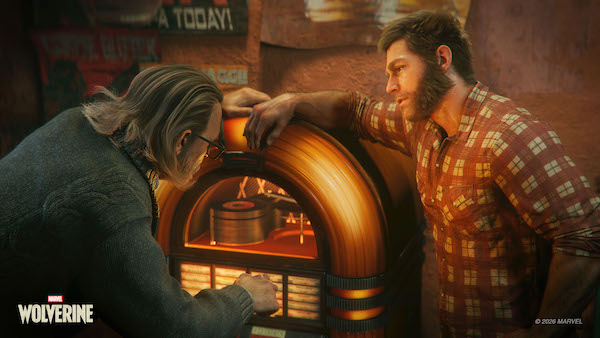
That doesn’t mean Logan’s past isn’t important, though: He doesn’t remember how the adamantium ended up on his skeleton, and the game will gradually uncover some of the mysteries surrounding his forgotten memories.
But Insomniac isn’t going to spend an entire game explaining how Wolverine became Wolverine. Instead, we’re getting a Logan who is already dealing with his abilities, his past and the fact that mutants aren’t exactly popular in this world.
In fact, the game’s setting is one where some humans don’t even know mutants exist. Mutants are hiding, they’re vulnerable and Logan is involved in trying to protect them. Importantly, there aren’t going to be any X-Men turning up to turn this into another X-Men story.
This is Logan’s story.
Making Wolverine feel different
The other major challenge for Insomniac has been making sure Wolverine doesn’t simply feel like a slower version of Spider-Man. That means changing the way combat works.
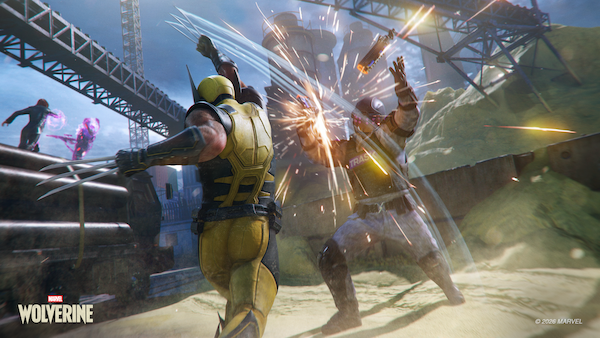
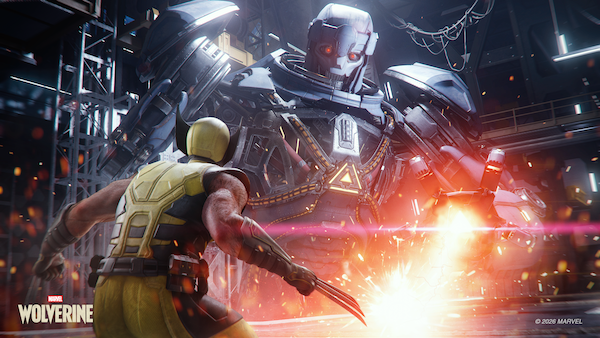
In Spider-Man, Peter Parker is incredibly fast and agile. He’s constantly moving around the battlefield, bouncing from one enemy to another. Logan is heavier. The camera is closer. The combat is more intimate – and when Wolverine hits somebody with three adamantium claws, there’s a lot more mess left behind.
The development team has also spent considerable time working on things such as destruction and the aftermath of combat, even working out how blood behaves has apparently been the subject of some pretty detailed discussions.
“We are, you know, having meetings about how is the blood going to react to this kind of surface versus snow on the wall versus character clothing. Those are the kind of conversations we end up having,” Reiner-Reed says.
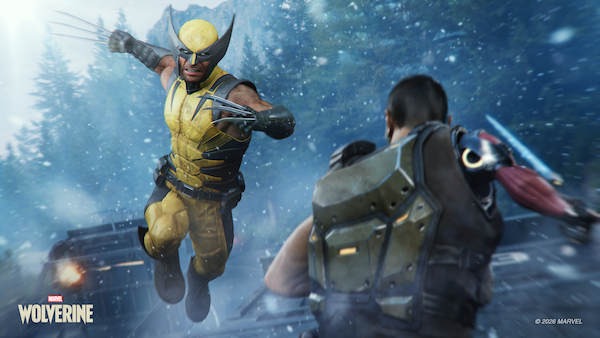
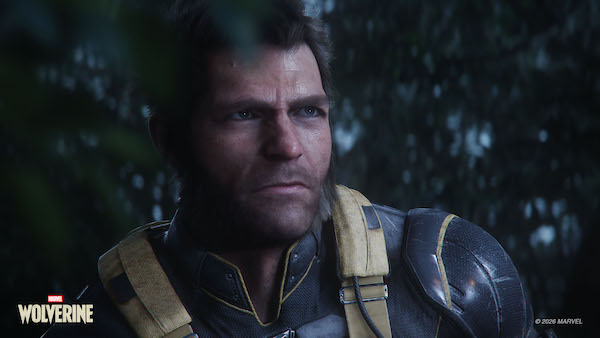
And because Logan isn’t spending his entire life in New York, Insomniac has also had to deal with a much wider range of environments. Canada, for example, has meant working extensively on foliage, snow and natural environments. The team has even gone out and captured trees using photogrammetry.
“When you’re making a Wolverine game, what are those aspects that we maybe haven’t done in game development as much?” Reiner-Reed says. “How are we going to improve blood? How are we going to improve destruction, cloth ripping?”
It’s the sort of stuff you might not consciously notice while playing, but all those little details add up.
Logan isn’t a psychopath
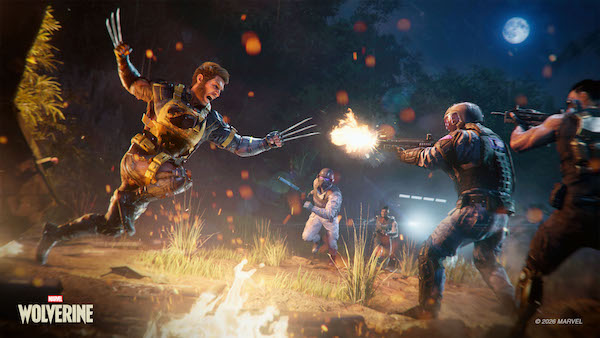
One of the things I found particularly interesting was the team’s approach to Wolverine’s violence. Yes, the game is more visceral than Spider-Man. Yes, Wolverine has claws. And yes, people are going to get hurt but Insomniac hasn’t simply decided to make the game as gory as possible just because it can.
There’s a character reason for the violence. “Logan is not somebody who glorifies violence,” Reiner-Reed explains. “He’s not somebody who is, like, playing with his food.”
He’s fighting because he needs to get the job done. That distinction has even influenced the animations.
During development, the team looked at some kills and decided that they simply didn’t feel like Logan. If he appears to be enjoying himself too much while ripping somebody apart, it doesn’t fit the character.
The goal is authenticity rather than simply throwing as much blood onto the screen as possible – and, if you’re not particularly keen on the blood and dismemberment, Insomniac has thought about you too.
Wolverine will include a low-gore mode, allowing players to remove blood sprays and blood from characters. Dismemberment can also be switched off, while profanity can be disabled in English.
Something for the hardcore fans
Insomniac is also trying to walk another tricky line with Wolverine.
The game needs to appeal to people who have spent decades reading Wolverine comics, watching the movies and obsessing over every obscure detail of the character but it also needs to work for someone who simply thinks: “Wolverine has claws. This looks cool. I’ll give it a go.”
“We want players to know that you don’t have to be a Wolverine or Marvel superfan and know all about its decades of history to enjoy this game,” Reiner-Reed says.
The game will introduce players to Logan, his powers and the important characters, but if you’re the sort of person who reads every sign, examines every object in photo mode and immediately recognises an obscure comic reference, there should be plenty there for you as well.
“We’ve done our homework,” she says. That’s probably exactly what Wolverine fans want to hear.
Keeping the North Star
Of course, making a game like this in 2026 means dealing with another challenge that developers didn’t have to contend with to quite the same extent in the past: The internet.
There has already been plenty of discussion around Wolverine online, with some people excited about what they’ve seen and others finding things to criticise the game play or the combat before they’ve even played the game.
Reiner-Reed says the team is aware of the online discourse but it doesn’t necessarily mean they’re going to change course every time somebody on social media complains about something. In fact, Reiner-Reed says the developers themselves are often their own harshest critics.
“We’re constantly playing – I’m playing the build every day- and we want to top ourselves every single time and deliver something amazing and at quality. We listen to the fans, and I love watching fan reaction videos when they’re excited about the trailers and things, but I think in game development there is so much information coming in. There are so many directions you can go. You have to stay true to the vision that you have.”
She says the team has to keep its “North Star” — the creative direction they’ve established for the game.
“If you start to listen to everybody, then you’re listening to nobody. You have to stay true to the creative direction that you want to deliver. I am confident that when people play what we deliver in September, they’re going to have a blast. They’re going to love this game.”
From God of War to Wolverine
Reiner-Reed’s own career provides an interesting link back through Insomniac’s history: Her first job in the games industry was as an associate producer on God of War 3.
That was back in the PlayStation 3 era, when developers were pushing that hardware as hard as they possibly could. The lessons from those days haven’t disappeared and one of the biggest is the importance of collaboration. A game isn’t made by one department working in isolation.
Artists come up with ideas. Animators contribute. Audio designers bring something different to the table. Writers, programmers and designers all influence the final product.
“Nothing is made with just one department,” Reiner-Reed says, “It takes so many different layers.”
That’s particularly important on a project like Wolverine, where the team is effectively trying to create something that feels familiar to players who know Insomniac’s games, while also being something quite different from what came before.
So, will Wolverine top Spider-Man?
That’s the million-dollar question. Insomniac has already set an extremely high bar for itself with its previous games – so how do you follow those games?
According to Reiner-Reed you simply try to beat yourself.
“With each iteration, you’re always striving to top what you did before.”
That’s easier to say than it is to do but the team certainly sounds confident about what it has built.
“I am so happy with the game we’re delivering in September,” Reiner-Reed says.
Insomniac has watched play testers react to the game. They’ve seen people coming out of previews excited about what they’ve played – and there are still plenty of things that Insomniac hasn’t revealed.
“I am excited for folks to be able to actually just play the game and experience the combat,” Reiner-Reed says, “And afterwards, hopefully people are going to have a laugh and go, “That was super fun.” It’s going to feel really satisfying.”
She says she is most excited for people to play the full Wolverine experience. “That’s what I’m most excited about.” And ultimately, that’s probably the best way to sum up what Insomniac is trying to achieve.
It’s not Spider-Man with claws. It’s not another Wolverine origin story. It’s not simply another Marvel game.
It’s a game that Insomniac hopes feels like Wolverine – and I’m pretty keen to see what Insomniac can do when the claws finally get centre stage.
Marvel’s Wolverine launches exclusively on PlayStation 5 on September 15, 2026.